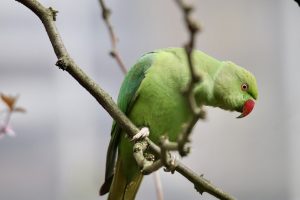
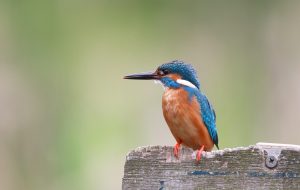
We’re pleased to share the results of our Winter 2025-26 bioacoustic survey, which provides a detailed picture of bird activity across seven Vitacress sites between November 2025 and January 2026.

Bioacoustic monitoring uses automated recording devices to capture wildlife sounds over long periods. Experts at Carbon Rewild analyse these recordings with specialist software to identify species presence, behaviour and activity trends, providing a consistent and non-invasive way to monitor biodiversity.

What we found
Across all locations, the survey identified 72 bird species, with over 237,000 individual calls recorded and analysed. Many familiar farmland and woodland birds were present, and our five most frequently recorded species in order were: robin, dunnock, wren, blue tit and long tailed tit.

The survey also highlights the ecological value of our sites, recording:

  • 10 red-listed species (highest conservation concern)
  • 24 amber-listed species (moderate conservation concern)
  • 33 green-listed species (lower risk or stable)
  • 5 introduced non-native species

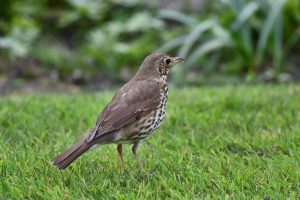
The presence of red-listed species, such as lapwing, skylark, house sparrow, yellowhammer, grey partridge and mistle thrush, highlights both the importance of our sites in supporting species of high conservation concern, and the need to continue managing them sensitively.

Several other notable and priority species were recorded during the survey, including:

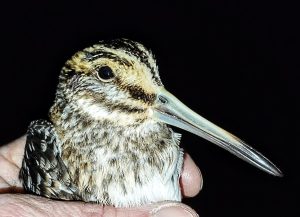
  • Long-eared owl and snipe at Abbey Farm in Kent
  • Peregrine falcon at Lower Link Farm in Hampshire
  • Common sandpiper at Mullens in Wiltshire
  • Water rail at the home of Vitacress Herbs in Chichester
  • Green sandpiper at Doddings in Dorset

The presence of these species indicates that our habitats are supporting a wide range of ecological niches, including aquatic and wetland specialists.

Why this matters: Delivering for nature and our customers
UK bird populations have experienced significant declines, and recent estimates point to the UK having tens of million fewer birds now than in 1970. This is primarily due to habitat loss and agricultural intensification, but also climate change.

This survey helps us to track biodiversity trends, identify opportunities for habitat improvement, and demonstrate the environmental value of our farming practices.

What happens next?
We will use these findings to inform land management and habitat creation, support biodiversity reporting and sustainability targets, and guide further monitoring. Continued surveys will allow us to measure progress, assisting with the delivery of meaningful outcomes for nature across Vitacress sites.
We look forward to sharing the results of our summer survey later this year, as we continue to build a clearer picture of biodiversity across our farming operations.

You can read the full bioacoustics report here: Vitacress Winter Bioacoustic Survey Report

Vitacress has published its latest Second Nature Impact Report, highlighting the positive steps being taken across the business to support our commitment to achieving net zero emissions by 2040.

The report showcases continued progress in tackling climate change, protecting natural resources, and supporting people and communities. Over the past year, investments in renewable energy, energy efficiency projects, and lower-emission equipment have helped reduce the company’s environmental footprint while improving operational performance.

Alongside our work to reduce emissions, Vitacress continues to strengthen its approach to sustainable farming, water stewardship, biodiversity, waste reduction, and responsible packaging. Key achievements include the successful transition to peat-free ornamental herb production, habitat restoration projects, and initiatives designed to increase recycling and reduce resource use.

Protecting and enhancing nature remains a key priority. The report highlights ongoing work to support wildlife and pollinators, improve ecological monitoring, and invest in chalk river restoration projects, helping to protect valuable local ecosystems for the future.

People are also at the heart of the Second Nature strategy. Vitacress remains committed to fair working practices, employee wellbeing, health and safety, and responsible engagement throughout our supply chain and the communities in which we operate.

Looking ahead, the business will continue to expand its decarbonisation programmes, strengthen biodiversity, and water stewardship initiatives, work closely with suppliers to reduce environmental impacts, and further enhance its approach to ethical sourcing and human rights.

Second Nature reflects Vitacress’ ambition to build a resilient and sustainable business, balancing environmental progress, business performance, and social responsibility to create a positive impact for future generations.

You can read the full report here: Second Nature Impact Report

And access an interactive version here: Second Nature Interactive Impact Report

As part of our commitment to responsible water use in the production of our products we conduct extensive monitoring to ensure full compliance with all our regulatory requirements.

Monitoring river water quality is extremely complex, due to the challenges from multiple pollution sources, for example field and road run-off and urban drainage, to detection thresholds of contaminants which can be very low – significantly lower than drinking water – and difficult, or even impossible to test for. In this article, we explore the realities and challenges of compliance, how we work with the Environment Agency (EA) and the steps we take to minimise our impact while providing the very best products for our customers.

But how do we do it?  You can read more here.

Washing Salad Leaves with Minimal Environmental Impact

Our Washing Process

Water is essential to our salad washing process, and we take great care to ensure our operations have minimal environmental impact. Our salads are washed using water sourced from the chalk aquifer. After washing our salads this water is returned to the environment through the Bourne Rivulet.

How It Works

  • We extract water from deep underground via boreholes in the aquifer.
  • This water is used in our salad washing process and for growing Watercress. We are ‘non-consumptive’ for our watercress and salad washing in the UK – this means we return our water to the local environment.

Once the process is complete, the water from the salad washing is screened to remove any remaining leaves and then allowed to slowly flow through two large watercress beds to allow any sediment to drop out before being discharged to a channel that feeds into the Bourne Rivulet approximately 400 metres downstream.

Monitoring & Quality Control

We conduct extensive water monitoring checks, above and beyond those required, to ensure compliance with all our regulatory requirements:

  • Decades of Testing – We have been rigorously testing water quality for years to ensure compliance with environmental regulations. We not only test our water chemistry but also assess the health of the aquatic biology in the river and surrounding channels at seven distinct locations, above, within, and below our operations.
  • The Environment Agency (EA) made us aware that we would need to check our water for pesticide residue that may be washed off salad leaves.  And we therefore embarked on a seasonal programme of pesticides testing in 2022.
  • The EA asked us to report our results as annual average concentrations and maximum concentrations. We did this in 2022 and generated a very large amount of data that we made available to the EA.  There were 9 results showing detections above the EA issued level of detection, and these were derived from the 14,512 individual test results from across the sampling year.
  • We then set up a trial ozone water treatment in 2023 to understand how these trace levels could be removed from the water.
  • Not all the levels of detection required by the EA could be met by the laboratory nor by the laboratory used by the EA.  Therefore, the analysis employed could not always provide scientifically provable results.  That’s why we worked with the EA for the next year to agree scientifically provable levels of detection of pesticides.  We also developed a new sampling and analysis methodology that enables much lower levels of detection and produce scientifically robust data. In June 2025 we tested this methodology through a new water treatment technology.  The results showed that this form of water treatment is highly effective at removing potentially present pesticides.  However, some of the very low levels of detection were still too low for the laboratory to scientifically prove. We are continuing to work with the EA and laboratory to agree scientifically provable analysis.
  • We have conducted a risk assessment to establish the likelihood of pesticides entering the water process. This assessed the persistence on the plant tissue once is has been applied in the field, noting applications are diluted and administered under strict guidelines. The second part of the assessment looked at degradation rates in water. The lower the persistence on plant tissue and the faster the degradation rate in water indicates that certain pesticides present extremely low risk to the environment from our washing facility. All data was obtained from the PPDB: Pesticide Properties Database and BPDB: Biopesticides Database hosted by the University of Hertfordshire.
  • We also monitor our river biology. The Bourne Rivulet and local streams support spawning sites for wild brown trout and are teeming with all age classes, which reflects good water quality.  Our waterways also have good healthy ranunculus (water crowfoot) beds that provide habitat and shelter to bullhead and the aquatic invertebrate communities associated with chalk streams. Key predators such as otters and kingfishers are resident on our site indicating a good source of food and therefore healthy ecosystem.

The Challenges of Monitoring & Regulations

Monitoring water quality, especially for pollutants like pesticides – presents significant challenges, many of which extend beyond farming alone. Although pesticide use is a key factor in modern farming, including organic farming, to ensure crops remain healthy and productive.

Monitoring river water quality is an incredibly complex task due to several key factors:

  • Multiple Pollution Sources – rivers are exposed to contaminants from many sources, including rainwater runoff, urban drainage, and, in some cases, untreated sewage. Farming is just one part of the broader picture.
  • Low Detection Limits – environmental pesticide detection thresholds set by regulators can be so low that UK laboratories often lack the capability to test for them. In fact, for 17 out of 88 required pesticide tests, no UK laboratory can currently measure the levels set by the EA – and these limits are less than those constraints placed on wastewater treatment, that is then discharged to the rivers and groundwater. This means that while we invest heavily in testing, current guidelines make it impossible to monitor every potential contaminant in the water.
  • With this presenting an industrywide issue, we continue to work proactively with the EA to refine our testing methods and seek out new solutions for this reporting.

Regulatory Compliance & Permits

We also work closely with the EA and our customers to ensure full compliance with all regulations:

  • We follow regulatory advice from the EA and are fully compliant regarding pesticide usage on our farms and our suppliers’ farms in line with EU and UK pesticides regulations and our customers policies.
  • We hold an abstraction license, allowing us to responsibly extract water for our operations.
  • We hold two discharge permits, ensuring all water returned to the river meets strict environmental standards.
  • We are in the process of varying these discharge permits, for which we have applied to the EA. This does not change how we work but is subject to new pesticide monitoring criteria as set out by the regulator. The revision of discharge permits currently under discussion does not ask for an increase in volume discharged to the Bourne Rivulet.
  • We have provided a comprehensive suite of data and information for the permit variation.

Looking Ahead

We continue to invest in the development of new water‑treatment solutions, exploring advanced technologies and applying scientifically robust analytical methodologies to further enhance the precision and effectiveness of our approach.

Our latest water treatment system is ready to progress through the EA’s permit‑variation process, a mandatory step before installation. We will be able to submit this application as soon as the determination of our existing permit variation has been completed by the EA.

These actions form part of our long‑term commitment to continuous improvement and transparent collaboration with regulators. We remain firmly dedicated to meeting – and where possible, exceeding – the industry’s highest standards for environmental protection and ethical practice.

Vitacress is pleased to announce that its net-zero targets have been formally approved by the Science Based Targets initiative (SBTi), reinforcing the company’s long-standing commitment to sustainability and climate responsibility.

Under this commitment, Vitacress aims to achieve net zero across its entire value chain by 2040. The validated targets include both near-term and long-term goals that map a clear path through to 2050, supporting a comprehensive and science-led decarbonization strategy.

To meet this goal, the company will focus on reducing direct emissions at their source. Any remaining emissions will be neutralized in accordance with SBTi standards.

Delivery of this plan will be driven by Second Nature, Vitacress’ environmental framework, which targets seven core areas: carbon, water, plastics, waste, soil health, peat, and biodiversity. Underpinned by its commitment to promote human rights across the end-to-end supply chain.

“This milestone reflects our belief that sustainability is at the heart of everything we do,” said Chris Jinks, CEO. “By aligning our goals with the science of the SBTi and taking the actions across our business that we need to take, we’re creating lasting, positive change for our people, our partners, and the planet.”

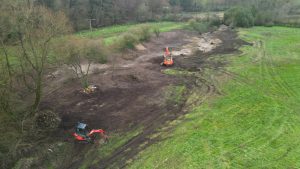
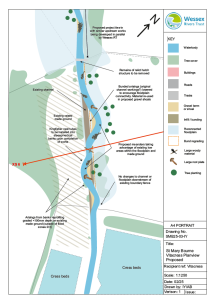
We’re proud to share that we’ve partnered with Wessex Rivers Trust to restore and enhance 200 metres of the Bourne Rivulet, one of Hampshire’s precious chalk streams and a globally rare habitat. Transforming the area from a straight, manmade channel into a thriving ecosystem.

Did you know? The UK is home to 85% of the world’s 200 chalk streams. Protecting them matters.

This project is part of our Second Nature sustainability programme, and these improvements will help create a healthier, more resilient river ecosystem and benefit species like brown trout, kingfishers, reed warblers, water voles, and otters.

What’s happening on the ground?

  • Restoring the river’s natural meander
  • Adding woody debris and root plates for kingfisher perches and habitat diversity
  • Creating gravel berms for fish spawning
  • Improving floodplain connectivity for wading birds
  • Installing kingfisher nesting burrows
  • Planting native trees, shrubs, and wildflowers
  • Enhancing river margins for biodiversity and climate resilience

And we’re not stopping there. Next year, we’ll invite our team to join in planting native trees and riverside wildflowers, bringing sustainability to life with hands-on action.

This work builds on the St Mary Bourne site’s impressive portfolio of habitat projects, including:

  • Planting a diverse native woodland with the Woodland Trust
  • Reintroducing black poplar (the UK’s rarest tree)
  • Creating a new chalk stream

This is sustainability made real – on the ground, in the water, and with our people.

We’re pleased to share the latest report from our bioacoustics bird and bat surveying, conducted spring and summer 2025. These surveys play a crucial role within our Second Nature environmental programme, as we collect biodiversity data to inform habitat creation and species-specific conservation programmes.

The bioacoustics devices use specialised technology to record bird and bat sounds, before being analysed by experts at Carbon Rewild, who put together our report.

Key findings include:

  • 91 species recorded, an 11% increase on 2024
  • 22 red list species recorded compared to 19 in 2024
  • 15 new species not recorded in 2024, including the rare red backed shrike and nightingale
  • Recordings of grey wagtail, a key Vitacress Farm Excellence species, increased by 147% year on year
  • Our greatest increase was for kestrel (588%), possibly due to them nesting close to one of our recording devices – they are very noisy!
  • Several aquatic species also showed increases, including water rail (413%), reed warblers (372%) and kingfishers (175%) enhancing chalk streams and aquatic habitats, which continues to be a key priority of our Second Nature strategy
  • 10 bat species, including the aquatic habitat dependent Daubenton’s bat and the rare barbastelle

This work highlights how farms can support rich and varied wildlife, and how sound can help us track and protect it.

As part of the Vitacress Farm Excellence Programme, we continue to work closely with LEAF (Linking Environment And Farming). Their sustainable farming principles help guide our approach to Integrated Farm Management, ensuring that the biodiversity insights gained through bioacoustics translate into practical, on-farm improvements. LEAF’s support reinforces the importance of evidence-based, nature-positive farming, something we are proud to champion across our sites.

Read the full report here: Vitacress Bioacoustic Survey Report Spring-Summer 2025

Coming up next: Our winter bird bioacoustics report is forecast for release in April 2026, featuring our Dorset farms for the first time. We will be keeping a close eye for any water pipits!

Thanks to Carbon Rewild, LEAF, our bioacoustics partners, and all our farmers – your expertise and collaboration made this possible.

The latest Intergovernmental Panel on Climate Change (IPCC) science makes it clear: we’re nearing a critical threshold for humanity. But limiting global temperature rise to 1.5°C is still within reach. That’s why we’ve committed to becoming net zero across our entire value chain by 2040, with near and long-term targets approved by the Science Based Targets initiative (SBTi) setting our path out to 2050.

Now in its third year, our Second Nature framework is the foundation of our environmental strategy to achieve net zero. It drives action across six core priorities: Reducing Emissions, Sustainable Water Use, Sustainable Growing, Enhancing Biodiversity, Reducing Plastic and, Cutting Waste. All underpinned by our commitment to promote Human Rights across our end-to-end supply chain.

These efforts are embedded into daily operations across all departments, from farming to finance, engineering to commercial, and is powered by teamwork.

Our Vitacress 2024 Second Nature Impacts Report highlights the meaningful progress we have made and outlines our next steps.

Some standout achievements:

🌿 45% reduction in water use at Vitacress Portugal

🌿 Ambitious soil health targets on all farms

🌿 100% peat-free ornamental pot herbs at Vitacress Herbs

🌿 Habitat improvements and nature partnerships across our farms

🌿 Major reduction in plastic and increased recycling

As Group Environment Manager Leah Mathias-Collins explains: “This is a big challenge, but we’re up for it! By working together with colleagues and suppliers, we’ll continue to deliver real change.”  

At Vitacress sustainability is Second Nature💚

Alongside our bioacoustic monitoring and traditional bird surveys, we’re proud to be using bird ringing as a vital tool to deepen our understanding of the bird populations on our farms.

We use key data such as Bird Age and Health, Breeding Success, Migration Patterns, and Prevalence of Avian Disease to inform our conservation strategies and habitat works. Ensuring our efforts truly benefit the endangered species they’re designed for.

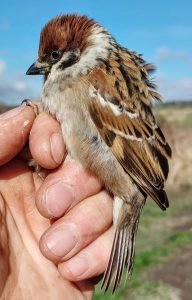
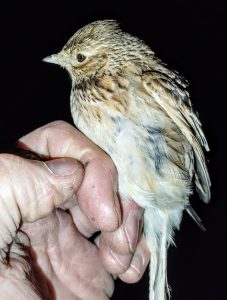
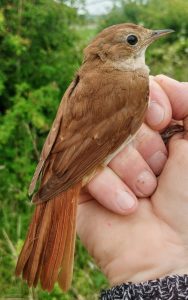
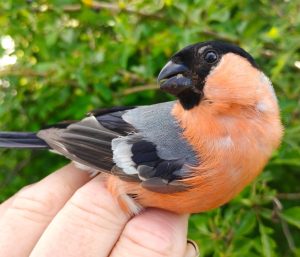
Some of the birds ringed recently at our Kent farm include Yellowhammer, Nightingale, Grasshopper Warbler, Skylark, Jack Snipe, Bullfinch and Tree sparrow.

Many of these birds have faced serious declines. For instance, tree sparrow populations dropped by 93% between 1970 and 2008. But thanks to our volunteer group, and data from our surveys, we’ve installed tree sparrow terraces in the right places, boosting their nesting and breeding success.

Also at our Kent farm, our bespoke bird boxes support birds of prey, and our Kent bird ringers recently confirmed kestrels breeding in one of them!

We’re working to expand bird ringing across all our farms. If you’re a licensed BTO bird ringer and want to be part of hands-on, data-driven conservation, we’d love to hear from you.


Farming doesn’t exist in isolation – it thrives as part of a living, breathing ecosystem. At Vitacress we believe that protecting and encouraging wildlife on our farms leads to healthier crops, fewer pests, and a more sustainable approach to food production. Given that 70% of the UK’s land is farmland, our sector has a unique opportunity, and responsibility, to address the biodiversity crisis.

But how do you protect what you can’t always see?

This is where bioacoustics comes in. An innovative field, transforming how we monitor and understand biodiversity.

As Leah Mathias-Collins, our Group Environment Manager explains: “For the past three years, we’ve proudly partnered with Carbon Rewild, specialists in acoustic monitoring and biodiversity data. We use bioacoustic devices to monitor wildlife species on specific farms and use the data to develop and deliver bespoke conservation projects.”

This winter marked a new milestone. We completed our first-ever winter bird recording project covering five UK sites. From November 2024 to February 2025, bioacoustics recording devices captured bird calls around the clock. We then used AI technology and expert analysis to identify species and estimate population levels.

Most exciting takeaways from this report:
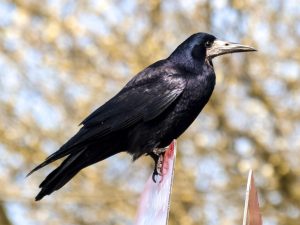
💚 79 bird species identified including Hawfinch, Kingfishers, Ring-Necked Parakeet, Rooks, Song Thrushes
❤️ 12 red list species of conservation concern identified including Yellowhammer, Greenfinch, Marsh Tit, Mistle Thrush, Herring Gull, Lapwing, Skylark
🧡 26 amber list species identified

With our farms spread across the South of England, this data gives a valuable snapshot of the local wildlife and shows how our farms are supporting these species in different ways.

You can read the full report here: Vitacress Winter Bioacoustic Survey Report

Next Stop! October 2025. We’re excited to share our spring/summer bioacoustics report which will also include bat monitoring.

Biodiversity is everyone’s business. At Vitacress, we’re proud to play our part by listening to nature and acting on what we hear.

📷 Thank you to Pixabay for the beautiful photography.

Vitacress Salads colleagues have chosen Hampshire and Isle of Wight Air Ambulance as their charity partner for 2025. Our colleagues’ support will make an important, positive difference to the charity’s life-saving service.

Since the Air Ambulance Team’s first flight in July 2007, a team of doctors, dispatchers, paramedics and pilots have responded to more than 19,000 emergencies across Hampshire and the Isle of Wight from their airbase in Thruxton, Andover.

When every second counts, they bring advanced critical care, usually found in a hospital emergency department, to their patients – whether that be beachside, roadside, countryside or bedside – giving them the best chance of survival and recovery.

When it comes to saving lives, time is critical. That’s why the charity has secured a more central location near Southampton Airport and are now fundraising the £3.6 million needed to rebuild and equip the site to be fully operational.

We are delighted to play our part in helping Hampshire and Isle of Wight Air Ambulance save time and save lives by organising fundraising activities throughout 2025. We look forward to watching our own little helicopter track our progress!

Find out more about this amazing charity at: https://www.hiowaa.org/

📸 Tim Wallace